Essential Guide to the Challenges and Processes of Rapid Prototyping
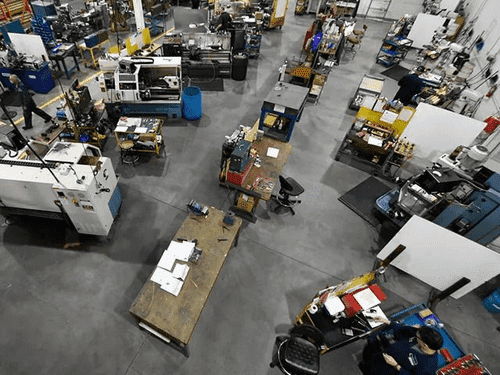
Rapid prototyping is one of the most effective ways to bring your idea to life early in the development process. It gives you something real to hold, test, and refine—long before committing to full-scale production. Using your 3D computer-aided design (CAD) model, we can quickly produce a physical version of your part or assembly, helping you catch design issues, test functionality, and make confident decisions.
Depending on your needs, rapid prototyping often uses either additive methods (like 3D printing) or subtractive ones (such as CNC machining). Each has its strengths, and at Macfab, we help you choose the right approach—or a combination of both—to suit your timeline, budget, and performance goals. Whether it’s a one-off component or a working assembly, rapid prototyping lets you move faster and smarter through development.
At Macfab, we sometimes employ a hybrid approach to prototyping, utilizing both methods. 3D printing can’t always produce the correct form, fit, and function of a prototype by itself, and so we add CNC machining to achieve the precision our clients need.
Understanding Rapid Prototyping
In the past, the terms “rapid prototyping” and “additive manufacturing” have been used interchangeably. However, even though they are closely related concepts in modern manufacturing, they have distinct meanings and applications.
Rapid prototyping refers to the quick fabrication of a physical model or prototype of a part or product using 3D CAD data.
On the other hand, additive manufacturing refers to the broader technology of building parts layer by layer from a digital file, typically using materials like plastics, resins, or metals.
Additive manufacturing is one of the technologies that enables rapid prototyping, and rapid prototyping is one of the applications of additive manufacturing.
Rapid prototyping gives you a significant advantage by providing the opportunity to understand how your product will perform much earlier in the manufacturing cycle. Consequently, this gives you ample time to tweak the design and implement improvements before final production.
Depending on the manufacturing process you choose, it is also cost-effective and requires minimal staff management. Moreover, since rapid prototyping is based on CAD, human error and budget overruns are minimal.
Due to cross-border manufacturing and the shortening of product development cycles, conceptualizing products early in the cycle is vital to your success. Rapid prototyping allows you to reduce manufacturing risks and keep the competition at bay.
The Stages of Prototyping: From Concept to Production
At Macfab, we understand that bringing a product from concept to full-scale production is rarely a straight line. It’s a collaborative and iterative process that combines innovation, engineering, and manufacturing expertise.
Our team works closely with clients throughout each stage of development, ensuring manufacturability, minimizing risks, and accelerating time to market. Here’s how we guide our customers through the prototyping journey:
1. Concept Development
Everything starts with an idea. Whether you’re solving a unique problem or launching a new product line, we help you evaluate the feasibility of your concept from a manufacturing perspective. Our engineers offer early input on materials, tolerances, and functionality to ensure the idea is grounded in real-world production potential.
2. Design for Manufacturability (DFM)
Before a design ever reaches the shop floor, it needs to be optimized for cost-effective, repeatable manufacturing. Our DFM review identifies potential issues that could affect quality or lead times. We collaborate with your design team to suggest improvements, like simplifying geometries or standardizing materials, so that your parts can be machined efficiently and consistently.
3. CAD Validation
Once the design is refined, our team performs CAD validation using advanced modelling software. We verify dimensions, tolerances, and assemblies to catch potential fit or function issues early. This stage also includes simulation and manufacturability checks, allowing us to confirm that your design is ready for prototyping and beyond.
4. Prototype Machining
With a validated CAD model, we move into the prototyping phase. Sometimes combined with 3D printing, our precision CNC machining capabilities allow us to quickly produce one-off or short-run parts with tight tolerances and exceptional finish quality. We inspect and test the prototypes to ensure they meet the design intent, allowing for functional evaluation and final design tweaks as needed.
5. Pilot Runs and Pre-Production
After successful prototyping, we offer low-volume production runs to test the manufacturability at scale. This stage helps identify any last-minute refinements and validates the full production workflow, including tooling, setup, and quality control processes.
6. Full-Scale Production
With everything dialled in, we scale up to full production. Whether you’re producing a small batch or scaling up to mid-volume production, Macfab ensures consistent quality, on-time delivery, and responsive support. We maintain open communication, allowing for quick and efficient implementation of any changes or updates.
Surge in Demand for Rapid Prototyping Services
Rapid prototyping demand has soared, driven by increasing market size and rising client adoption:
- The global rapid prototyping service market was valued at ~$2.47 billion in 2024 and is expected to reach $9.68 billion by 2033, growing at a compound annual growth rate (CAGR) of ~16.4%.
- The broader rapid prototyping market, with services and systems, was around $3.3 billion in 2024 and is anticipated to exceed $21 billion by 2034, with a 20.5% CAGR.
These figures reflect growing customer preference for fast, flexible, and iterative development, particularly where traditional tooling or long production lead times cannot keep pace.
Reshoring Manufacturing: Bringing It Home
North America leads in prototyping usage, holding ~36% of global materials demand and over 38% of service market revenue. A clear shift toward reshoring manufacturing has emerged, spurred by supply chain vulnerabilities exposed during pandemics and geopolitical tensions.
Prototyping plays a crucial role in this reshoring trend, enabling companies to validate designs and quickly and confidently ramp up local production capacity.
Driving Forces by Industry
- Medical & Healthcare: Rapid prototyping produced vital medical devices and PPE during the COVID-19 response. The materials market is experiencing high growth in medical applications, with thermoplastics and advanced polymers leading the way. The electronic prototyping segment, including patient monitors and medical sensors) hit $2.8 billion in 2023, rising at a 20.6% CAGR to 2031.
- Aerospace & Defence: Canada’s aerospace and defence prototyping market is currently around USD 2.21 billion (2023) and is projected to almost double to USD 4.0 billion by 2032, growing at a CAGR of ~6.8%.
- Military: The Canadian Armed Forces are increasingly prototyping and producing parts more quickly to maintain a technological edge, particularly for modernizing legacy equipment. Initiatives like Canada’s “call for prototypes” support pre-commercial military applications that can be tested quickly in real-world settings.
Challenges in Rapid Prototyping
The rapid prototyping process also has its unique challenges. Multiple factors come into play when considering a rapid prototyping method, including purpose, cost, complexity, quantity, and quality, all of which significantly impact the success of prototyping.
Let’s look at some of the challenges of rapid prototyping.
Cost and Availability of Materials
Rapid prototyping is an excellent way to get a proof of concept. However, it won’t give you an accurate representation of the final product’s feel, finish, colour, or texture. With 3D printing, the material options are also limited. Moreover, some materials require a thorough understanding to ensure safety and quality.
At Macfab, we are highly knowledgeable in both additive and subtractive rapid prototyping techniques. We specialize in high-precision CNC turning and milling services, and collaborate with expert additive manufacturing shops to deliver solutions that overcome various material limitations
Cost of Equipment
Rapid prototyping technology equipment can be costly, especially if you are looking for highly specialized prototyping machines. The cost also increases with each iteration of the prototype, which can impact the budget of your product development cycle.
Although rapid prototyping will save you costs in the long run, be prepared for a higher initial capital expenditure as you refine and optimize the design.
Lack of Skills and Well-Trained Staff
The skilled labour shortage makes finding the right talent with diverse knowledge and experience in rapid prototyping a challenging task. The right person needs to possess knowledge of materials, tools, programming, project management, and product development.
Add to that the complexity of an internationalized manufacturing supply chain and compressed timelines, and you can easily understand why finding the right talent is essential.
We take talent seriously at Macfab and have an expertly staffed team of CNC machinists. With decades of experience managing highly complex manufacturing tasks, know that you are in expert hands when you choose to work with us.
Accuracy and Quality of Prototypes
Rapid prototyping is not always 100% accurate. Rapid prototyping provides valuable insights into part design and functionality, but it may not always offer the precision required for final production
Accuracy is crucial in specific rapid prototyping techniques, such as stereolithography (SLA). SLA rapid prototyping can create medical-grade and high-precision prototypes. It works by using a UV laser to cure liquid resin layer by layer, allowing for extremely fine detail, smooth surface finishes, and tight tolerances. This makes it ideal for applications like medical devices, microfluidics, and intricate housings where precision and surface quality are critical.
Software Capabilities
Although machinists utilize CAD for rapid prototyping, the variety of software and file formats can introduce unnecessary complexity. Some software experiences persistent data loss issues due to the inherent limitations of the file format, which can result in poor surface quality, underscoring the need for improvement in this area.
Macfab’s Hybrid Approach to Overcoming Prototyping Challenges
At Macfab, we recognize that no single process is suitable for every project. That’s why we sometimes adopt a hybrid manufacturing approach, combining the precision of CNC machining with the flexibility and speed of additive manufacturing. This integrated model enables us to provide better support to customers across various industries, especially those with complex designs, tight timelines, or evolving specifications.
By combining subtractive and additive methods, we can prototype faster, more cost-effectively, and with fewer compromises on performance or quality.
Solving Common Prototyping Challenges
The prototyping phase is often the most critical—and the most challenging. Here’s how Macfab’s hybrid approach and in-house expertise help overcome the key barriers:
- Material cost & availability: We optimize material selection early in the design phase. With both CNC and AM capabilities, we can recommend cost-effective alternatives, produce quick-turn plastic or metal AM prototypes, and reserve our CNCs for higher-fidelity runs.
- High equipment & setup costs: Macfab eliminates this barrier with a fully equipped in-house facility. We invest in advanced CNC mills, multi-axis lathes, and additive systems so our clients don’t have to.
- Skills & workforce limitations: Macfab’s team includes experienced machinists, mechanical engineers, and DFM specialists. We work as an extension of your team, offering guidance from concept to completion.
- Accuracy & quality of prototypes: Our CNC capabilities deliver precision down to the micron level, while our additive systems produce high-resolution parts with functional materials.
- Software & design limitations: We support a wide range of CAD/CAM platforms and can work directly with your design files. Our team performs CAD validation, simulation, and even minor redesigns to ensure smooth production.
The Result: Faster, Smarter Prototyping
CNC machines and 3D printing equipment can produce parts in both metals and polymers. To provide a more comprehensive offering, we also integrate our conventional machines to finish the 3D-printed parts and improve the surface finish. This integration works well for our customers who require the timely production of concept parts for physical reviews and assembly analysis.
We can deliver almost any part you imagine. With travels up to 40 inches on the X-axis, 20 inches on the Y-axis, and 20 inches on the Z-axis, our CNC machining centers can create a wide range of part sizes. From a lifesaving medical component to an aerospace part built to withstand the harshest environments, it is all possible at Macfab!
And since we offer a comprehensive suite of prototyping and production services, customers can also validate program operation by operation, thanks to our industry-leading first-part yield percentage. Once the part is produced either by 3D printing or CNC machining, our coordinate measurement machines (CMM) are ready to kick into service. Using Solidworks, we can also inspect the part for any deviations and create it to the original specification.
The Complexity of First-Time Prototype Development
Developing a prototype for the first time can be a complex and overwhelming process. From navigating design uncertainties to selecting appropriate materials and methods, many clients face unexpected challenges.
Issues like manufacturability, tolerance stack-up, material compatibility, and budget constraints can delay development or result in costly rework. For companies without in-house engineering or fabrication capabilities, these hurdles are even greater.
Macfab helps clients overcome these obstacles with a hands-on, collaborative approach. Our team provides expert guidance from day one, reviewing DFM, validating CAD files, and recommending the most suitable production methods—whether CNC machining, additive manufacturing, or a combination of both.
We help our clients refine their concepts, reduce complexity, and avoid common pitfalls. By leveraging our advanced equipment, material expertise, and quality-first mindset, Macfab ensures every prototype meets the intended performance requirements—on time and within budget. Our goal is to simplify the process and build confidence at every stage.
The Importance of Experience in Prototyping
Experience is critical when navigating the uncertainties of prototyping. Every project comes with unique design constraints, material considerations, and production challenges—and it takes a seasoned team to anticipate and solve them quickly. With over three decades of precision manufacturing expertise, Macfab has helped clients across aerospace, medical, defence, and advanced tech sectors turn complex concepts into functional, manufacturable parts.
Our team brings deep knowledge of materials, tolerances, and multi-process workflows, allowing us to catch issues early and recommend innovative, cost-effective solutions. From first-article prototypes to pre-production runs, we’ve supported projects with tight timelines, high regulatory standards, and intricate geometries.
Macfab’s track record of delivering consistent quality, precision, and support through every stage of prototyping makes us a trusted partner for companies bringing innovative products to market.
The Explosive Growth of Short-Run Prototyping
The explosion of short-run prototyping reflects industry demand for faster, lower-risk development cycles and just-in-time production, especially in the aerospace, medical, and defence sectors. Companies now prioritize agility over mass quantities, using small batch builds to validate designs, test functionality, and pivot quickly.
At Macfab, we can meet this surge with our hybrid CNC capabilities. We handle runs from one to several hundred parts, utilizing advanced machining, precision 3D printing through trusted subcontractors, and in-depth DFM support.
We control tooling, production metrics, and quality in-house, enabling fast turnarounds, tight tolerances, and seamless scalability. Macfab’s full-suite services mean clients get reliable, end-to-end support when every prototype—and every day—counts.
Final Thoughts
Prototyping plays a vital role in modern manufacturing, bridging the gap between concept and production with speed, precision, and confidence. As product development cycles tighten and quality demands rise, having a reliable prototyping partner is more important than ever. Macfab’s end-to-end capabilities—from design validation and material selection to hybrid CNC and additive production—ensure that every prototype meets performance goals and production standards.
Whether you’re launching a new product or refining a complex part, we’re here to help you move faster and smarter. Connect with our team today to learn how Macfab can support your next prototyping challenge with precision and expertise.
