The Importance of Inspection and Testing in Aerospace CNC Machining
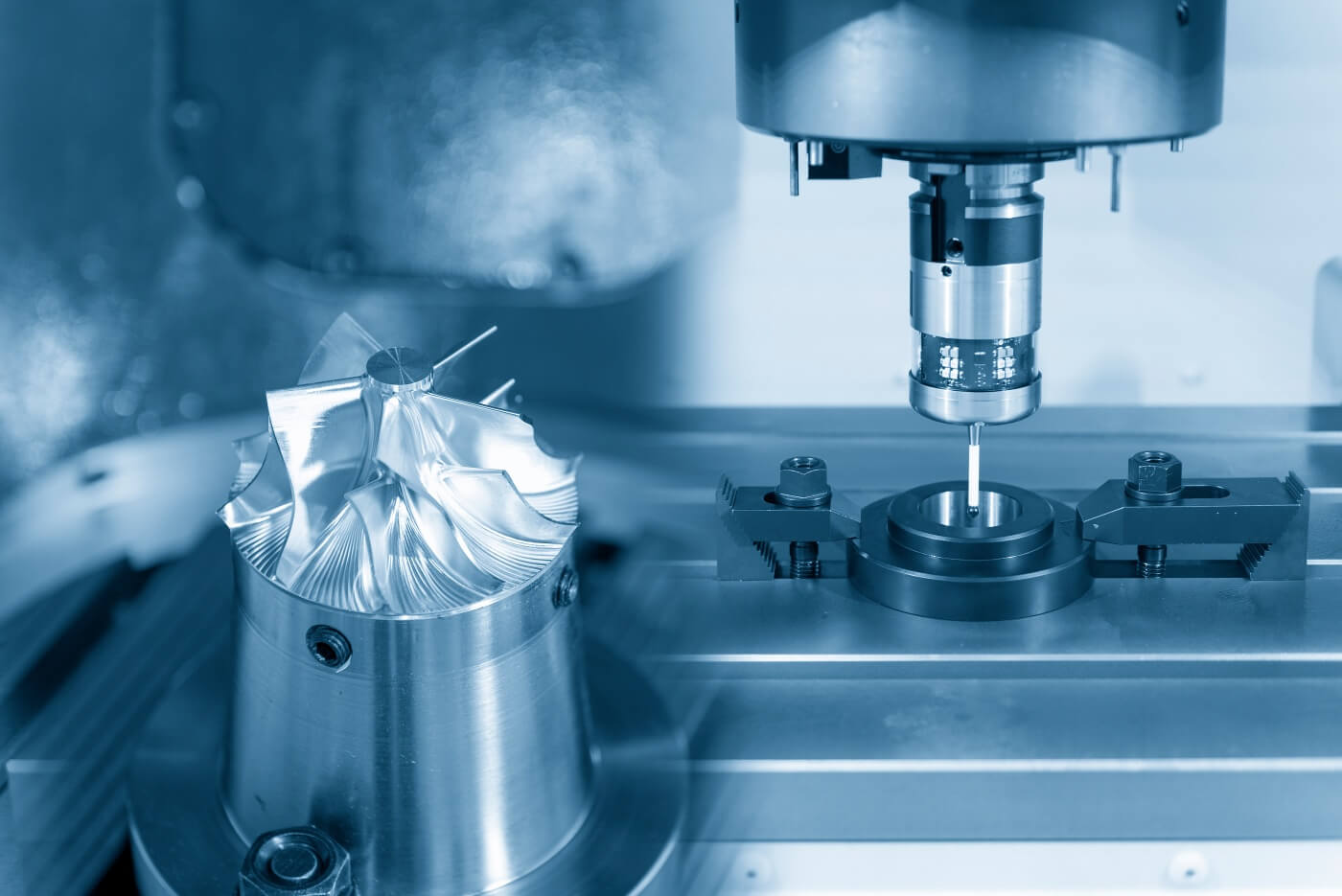
Critical aerospace components require precision. Any defects in a machined part can lead to catastrophic failures, endangering lives and compromising aircraft safety. Rigorous inspections and tests help identify and eliminate such flaws and maintain a high level of precision during the CNC machining processes.
The Significance of Rigorous Aerospace Standards
The AS9100 standard is an internationally recognized quality management system (QMS) in the aerospace industry. It builds upon the ISO 9001 standard by adding requirements tailored to meet the unique demands of aviation, space, and defence organizations. AS9100 plays a crucial role in setting the benchmark for quality in the aerospace industry by ensuring safety, reliability, and conformity across the entire supply chain.
In addition, AS9102 is a First Article Inspection (FAI), which verifies that a new or modified product meets specific requirements before a production run. At the same time, AS9103 focuses on the variation management of Key Characteristics (KCs), which are features of a material or part whose variation significantly affects product fit, performance, service life, or manufacturability.
These standards and inspection processes control critical features and perform data analysis to ensure each machined component meets the tight tolerance and high quality required in CNC machining for aerospace.
Ensuring Reliability through Advanced Testing Methods
CNC machine shops have several inspection and testing methods to detect flaws and defects in space and aircraft components. These inspection tools include simple micrometres, gages, callipers, and more sophisticated coordinate measuring machines (CMMs).
Surface roughness testers and optical comparators measure the texture and smoothness of the part’s surface to detect imperfections and verify surface finishes.
The Role of Inspection in CNC Machining
CNC machining shops incorporate inspection and testing throughout the manufacturing processes, including pre-machining, in-process, post-machining, and final inspections. CMMs, non-destructive testing, and optical systems are advanced inspection techniques that enhance trust and safety assurance for passengers and aerospace companies.
Macfab sets the standard in component manufacturing by maintaining a world-class quality management system built on rigorous process standards and advanced equipment investments. Precision is our priority, ensuring every product is accurate and consistent. By continuously refining our processes and adopting innovative solutions, we simplify workflows and minimize potential failure points, delivering reliable results every time.
Macfab’s Commitment to Aerospace Quality Control
Macfab’s approach to aerospace quality assurance begins with its certification in AS 9100 and its commitment to adhere to AS 9102 and AS 9103 standards. These stringent standards and inspection protocols are a fundamental part of the aerospace manufacturing process at Macfab to uphold the highest levels of safety and reliability.
Macfab has been a trusted partner to global aerospace suppliers for over 20 years, delivering precision-engineered components and sub-assemblies that meet the highest industry standards.
Our expertise spans various applications, including electromagnetic flight control systems, guidance systems, and critical components such as shafts, gearboxes, housings, and RVDT units.
With a steadfast commitment to quality and reliability, we take pride in supporting the aerospace sector with solutions that perform flawlessly in the most demanding environments.
Connect with us for your aerospace CNC machining needs that demand the highest levels of quality assurance and safety compliance.
